
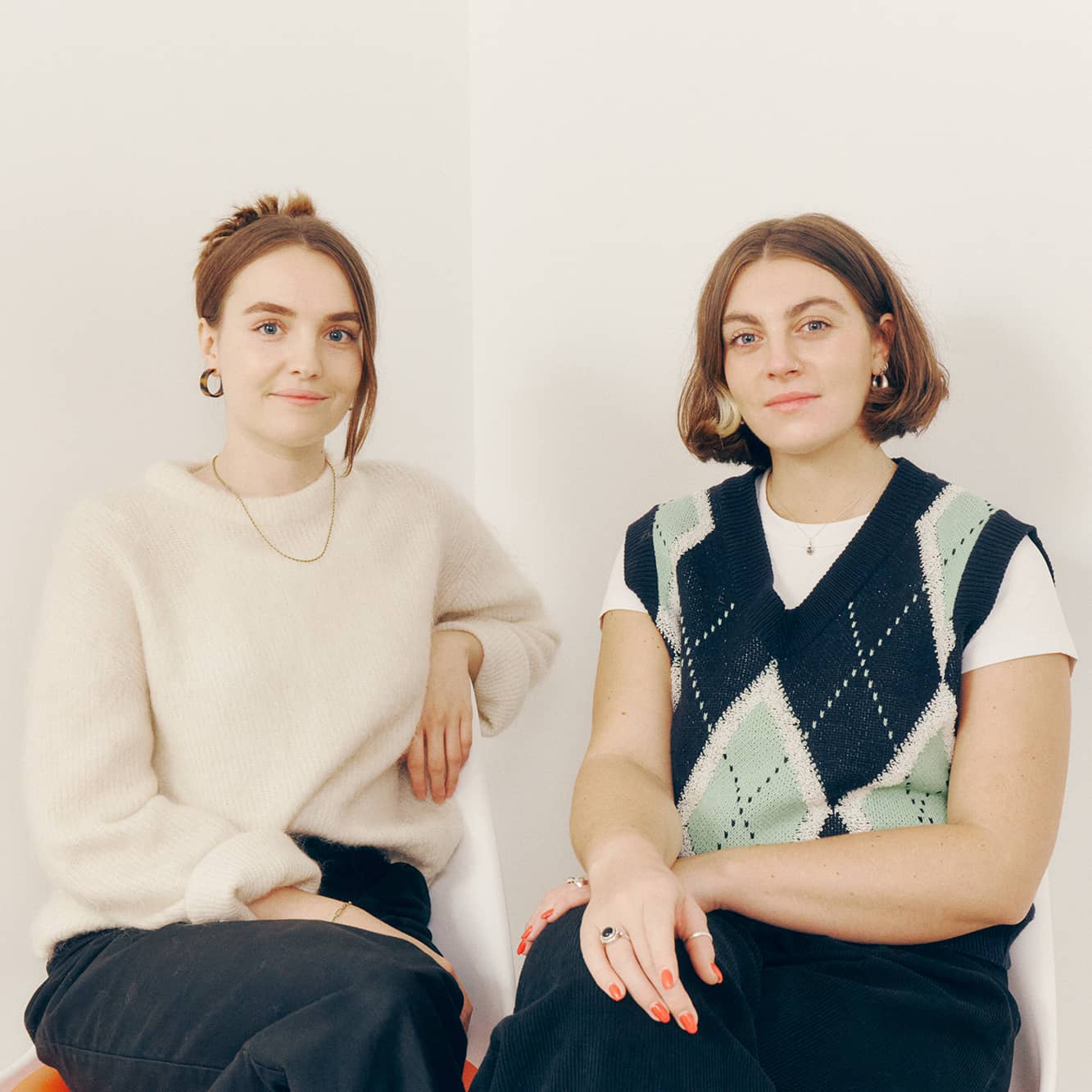
Millie Wood-Downie & Molly McGeachin
In this episode Millie and Molly, co-founders of The Project People, discuss their approach to redefining producing in the cultural sector. Both began as self-producing artists and transitioned into professional producing, emphasising a flexible, transparent, affordable, and holistic model. They highlight the power of working as a duo, enabling them to balance creative autonomy with practical support, avoid burnout, and expand their reach and impact. They advocate for slowing down in an industry that often pushes for speed, fostering radical self-care, and building strong peer support networks. Their vision for the future of producing emphasises collaboration, innovation in fundraising, and championing producers who hold significant responsibility in the arts.
We’d love to hear your take on this conversation. Click here to scroll down and see what others have shared, or add your own reflection.
The Project People
We are The Project People aka multi-award winning Creative Producing duo Millie Wood-Downie (she/her) and Molly McGeachin (she/her). Created in 2023, we are on a mission to share our flexible, transparent and mindful approach to producing creative projects. A process we have fused through our combined 19 years of experience producing everything from theatre, drag, cabaret, festivals, workshops and events.
Everything we do is financially viable and mindful for both artist and producer, with a commitment to transparency and openness; something we were both looking for as we started life as self-producing artists and continue to make our own work.
The Project People is more than a producing house or artist development organisation. We are advocates for independent creative freelancers, providing support with non-tokenistic wellbeing embedded in our practice, whilst making amazing projects happen!
Past work include HIGH STEAKS co-produced with ELOINA & Beth Sitek (New Diorama, Bristol Old Vic), GISELLE:REMIX (Pleasance Theatre) and Fool’s Moon Cabaret (Soho Theatre and UK tour).
Image Description: Millie and Molly founders of The Project People – two women in their late twenties/early thirties sitting next to each other, looking at the camera, smiling.
Transcript
Intro: Welcome to the Producer Gathering podcast, where we’ve invited conversations between independent producers in the cultural sector to talk through the issues we are facing right now. We are developing a collection of resources, case studies, events and training opportunities to support, develop, nurture and sustain producers that reflect the diversity of our communities. More info can be found at www.producergathering.com
Millie: Hi everybody, my name is Millie, my pronouns are she, her, and I’m one half of the project people I’m here with.
Molly: Molly, my pronouns are also she, her, and I’m the other half of the project people.
Millie: And today we are talking about redefining producing. So we’re talking about flexible models, sustainability and the power of working as a duo, which is really exciting. So shall we talk a little bit about how we got into producing more, moll? So what led you to producing in the first place, and how did your individual journey lead to us working together?
Molly: Oh, gorgeous question. I think I was producing a long time before I said that I was a like, quote unquote, producer. Always loved like making theatre, even when maybe that was a phrase I didn’t really know, just in terms of like, I liked drama and acting, but actually what I really liked was devising and collaborating and starting with nothing and then finishing the day with something that could be on a stage in some form. So that was sort of, yeah, school and early days. And then I went to university and I studied English literature and drama, although let’s be honest, I sacked off the English literature quite early and was more in the drama zone. And yeah, my course was, I’ve learned now that it’s actually quite a rare occurrence, but my course is really about making and it was also really about all of the structure and the creativity and the artistry around making live performance. So it wasn’t just about being on the stage. It was about, you know, lighting and staging and set design and producing and stage management and everything. So I got a sense for that. And yeah, it felt like I was just being sort of like flowing through the state of it’s always making, and putting it on, you know, putting the show on as well. So then, yeah, I was sort of producing, I suppose, a little bit of university and then when I got out of uni, I started a theatre company called gutter snipe. Very good friend, Grace Church, who you know incredibly well. And yeah, then I was self-producing for my company and then I started producing for other people and then it became like, hey, maybe I’m a producer. And then, yeah, like soon after that is when I met you.
Millie: Love it. Such a gorgeous journey, very, very similar to mine. I also was on a really kind of practical course at uni. I actually went to uni to be a poet, kind of sacked off performing. I’d kind of fallen out of love with it and I moved to Bristol to start this venture as a spoken word poet and left with a physical theatre company, which I was producing, which I think is quite, yeah, it’s quite common, isn’t it? Falling into producing this kind of idea that someone is the person that takes the lead, that takes the reins and kind of says that I’m going to start paving the way for this project or this company. So, yeah, I started a theatre company called Penultimate with an amazing collaborator called Ellie Bartram, who we made really weird abstract physical theatre. I was really based on Bhutto and I was really into that world of DIY, experimental work, and we started making stuff that fell out of the boundaries of genre and form and then we started producing kind of experimental, multidisciplinary events, which we’d all pitch in a bit of money and try and sell as many tickets as possible and we’d have these huge crowds come to these spaces. They would last for like four hours and then they would completely disappear and never to be seen again. And it was a really, really exciting time. But yeah, when I decided that I was going to kind of formalise myself as a producer, I started working with a brilliant mentor called Luke Emery. He’s the producer of the Pervasive Media Studio in Bristol. And he told me I was a producer basically. I didn’t know that that’s what I was doing and he kind of said, you are one. He kind of grilled me for about 45 minutes and was like, yep, sold, you’re a producer. So that was kind of the beginning of all of that, and yeah, I was also making theatre as well, I had a solo show that I was making for about three years and toured the UK with, and very set about self-producing that. It’s very important to me that I was the producer on the project, and then whilst I was mid-tour I was like, this is ridiculous, I need a producer. And so I’m kind of falling out of that and entering into this. Working relationship with you moll’s and yeah, really putting the energy into producing for others and building something that, yeah, feels a little bit different, but we’ll get onto that later. Yeah, so we we’ve spoken quite a lot, we speak quite a lot about how we have how we feel we’ve got quite an alternative producing model. How do you feel that we identified the need?
Molly: Oh, I mean, I’d say we identified the need from being theatre makers and artists and looking for that and realising that it didn’t exist in the form that we needed. I think we were both separately doing that on our own sort of journeys in parallel, almost. And for me, at least I’ll let you speak for yourself, it was that I absolutely met amazing producers and not saying that I didn’t at all, I’ve met some fantastic ones. But it was hard to access them, whether that was financially, whether that sort of practically, as in like literally like how do I speak to you? And also, yeah, not quite understanding what our working relationship would be, as in if I was gonna be working with a producer, what would that actually look like? So I think that that’s where we started, we’ve obviously grown from there, we’ve talked more about what the project people does and sort of our ethos, but that was a real starting point for me was like, it feels like there are so many artists that could really do with some targeted producer one-on-one time, me absolutely being like, I needed that five years ago. Where is that? And how could I access that that’s independent? Because obviously amazing producers at venues, but that is a different relationship. And there’s obviously a connection there with a venue. So yeah, if you’re looking for something that was independent, targeted and easy to access and relatively affordable, struggle to find that.
Millie: I really agree with that. I think that there is that weird middle bit. So there’s quite a lot of support for emerging artists. I know we see, we’re seeing a lot that support disappear, and things are getting harder to find. There is support, at least there is an emphasis of funding and organisations doing amazing work to support emerging artists and then there’s kind of the other side of things where people are more established and they’ve built those connections, they’ve built those relationships and they’d done it before and so I’m not saying it’s easy by any means but there is a blueprint that they’ve created or at least they know what does and doesn’t work. And I felt like there was this kind of middle moment when I’d finished making my show and I’d been producing for other people as well and been producing shows and they’d reached a similar stage, kind of having established work with audience bases that were built. They had reviews, they had, you know, traction and it was that next bit that seemed super unclear and… That is because there is no one route through it. You’re kind of in that new space of finding alternative partnerships and diversifying how your funding work and really making that kind of more of your career and part of your income or all of your income and I struggled to understand A) how to do it initially when it was me and B) how to communicate that with other people that were trying to figure it out as well. And I think that that’s what you and I have done. We’ve come together now having done a lot of those journeys through in lots of different ways. And it’s about mirroring and matching and adapting dependent on the person and the project. And I think that what we’ve tried to do is magnify that, so each individual artist or project that we work on, as is any project, is completely best about to itself, it’s completely unique to itself. And I think what we’re trying to do is offer that, which is really that real one to one really getting into the project and understanding it and understanding how people work and what it needs and thinking about innovative ideas. We’ve tried to make that on a larger scale. So we’ve tried to create opportunities where people can come in within two hours and leave with some sort of idea of what that kind of bespoke, unique, individual footprint might look like.
Molly: Yeah, absolutely, which is also slightly less outcome based. I think I was used to the idea of like, a producer, make sure that the show happens, everybody’s there, and it goes up. Obviously, they do. That’s amazing. But bringing in the idea of strategy, creative strategy, which obviously, you know, all producers do, but actually showing us is that we can have that pre-show, like maybe we don’t have a show. If we don’t have something that’s going to go up and is going to like happen right now and that’s absolutely fine but actually investing in a relationship with the producer that is about the strategy and about the long game, rather than maybe the here and now and more in the like troubleshooting zone. I think that’s something that yeah I didn’t I wouldn’t have even known how to comprehend that when I was maybe starting out but I think it would been so useful for me. I probably would have. Sped up and smoothed out my trajectory a little bit. So 2024 was, yeah, it was a full on year for us. It was a big year. And we did the Roundhouse Accelerator course. How would you say that that sort of shaped our approach to producing?
Millie: Oh, that’s a really good question. So we went into the Accelerator with an organisation, a business, a partnership between you and I, we had shows that we were producing, and we had lots and lots of ideas of how we would really implement strategy and flexibility and affordability into this service offering that we have. And we went in with names of these things, but the actual content of them, how they ran, how we were reaching people with them and what they really looked like on the granular, that didn’t exist. And I would say the main thing that Accelerator did was allow us to A) understand what they were, but also really, really understand the importance of them. We have,, kind of shared strong theatre background but we’ve both produced lots and lots of different things from events, festivals, youth summits, workshops, you know, we’ve produced across a really, a really vast amount of creative projects and working with other creative businesses in, yeah, creative spheres but didn’t work in theatre and understanding how actually they could benefit from things like poker producing, which is our… To our like crash consultancy strategy session, which really deep dives into a project and we build you a kind of bespoke plan that other people from other industries doing different things could really benefit from that as well. And I think we’d always wanted to not kind of pigeonhole ourselves into just theatre, although live performances are absolute passion. So being able to kind of crash test that with other creatives, I think was really, really important. Yeah, what do you think Accelerator did in terms of shaping our current approach? Yeah, I mean.
Molly: I agree with you, again, useful, we’re on the same page. But yeah, I suppose I should have probably given a little bit of information about what the roundhouse accelerator is as well. But yeah, it was a sort of incubator programme wasn’t it for 10 creative businesses at the Roundhouse, and the whole sort of ethos behind it was yeah, it doesn’t matter where you are at the stage of your business has to be early stages could be that you’ve launched, could just be like sort of a really strong idea. And we were just learning, weren’t we, from mentors, from external speakers, from Dan Su, big up Dan Su, amazing course leader. And yeah, like having sort of a crash course in like the building blocks of like finance and marketing and branding and services, but also like the, yeah, growth and expanding our, sort of horizons, yeah and really like building some long-term aims for a business. I really enjoyed that we started to call ourselves a business and it was quite an important like turning point for me because I think sometimes it has had like negative connotations for me. But I really enjoy it being like, yeah, no, we’re creative producers and we’re also a creative business and we also entrepreneurs, it’s really good. And yeah, obviously we’re, we’re both freelance before that and sort of moving into this partnership business model that we’ve got now has been really exciting to be able to go, okay, that’s the next step. Actually, so much of the freelancing that we’re done, that freelancing energy is staying with us. We’re not like saying like, goodbye to that. We’re keeping all the good bits of freelancing. We’re bringing it to this, this next stage really, yeah. So hugely important for us. And yeah, thanks, Dan. Thanks, Roundhouse, thanks everyone. Part of Accelerator.
Millie: I completely agree. And I think that actually, in terms of our approach, there’s our approach to producing and there’s an approach as a business, but like, there is also the approach of the internal working of the business in terms how we actually find work. And, I think there’s something about philosophically something about formulating everything and making it quite official that has allowed to break through that imposter syndrome of being like, I am gonna pitch for work. I am going to pitch for ourselves. I am going to big ourselves up because it’s for the business. Whereas as an individual freelancer that can be really daunting and can feel really tricky. And so, yeah, yeah. Love it. So we have been talking quite a lot about rethinking the producing model, It’s something that we kind of talk about a lot Moll’s and yeah, in terms of how we approach producing or how we define our approach to producing, what do you think makes it different?
Molly: I suppose the starting point would be that we call ourselves creative producers, as do a lot of others, but some don’t. And I think the way that we define that is that we are involved in the creative vision. For some people, that might be that, we are actually there at the inception of ideas. We’re in the rehearsal room a lot with our sounding board. Other people, it might be that we’re joining them slightly later on in the project, but we’re building a creative team, again, with a sounding board for sure, but yeah, we mulch, we’re in the creative zone that’s just the way that I think both of us like enjoyed working with producers in the past when we’re making, and it’s what excites us as well, isn’t it? That’s where we want to be. So yeah, that’s the sort of starting point, but then I’d say as well what we’ve honed over the last year and a half of sort of describing us as. Flexible, transparent, affordable, targeted, holistic. Those are the sort of words I’ve come back to. So yeah, flexible and adaptable in the sense that we might be working in the interim, like you said before, we might not be there for the whole project. We might be targeted, might just be doing some elements of the producing while we’re working alongside an artist that’s a self-producer as well, affordable because we’re targeted, and we do have sort of some services that mean people can access us for smaller pot of money for a smaller amount of time and yeah, transparent, big thing for us, isn’t it, that we just do say like, this is how you can contact us, this is what we do. This is what we don’t do and this is how much it would cost and how we can go about that. And then holistic, yeah, we take the artist and everything that comes with them into account, whether that’s their side hustles, their multi hyphenate, other things that they do, their, yeah, their life, like them as a person as well, which is, yeah really important. So, yeah, I’d say they’re the sort of key things that make us a bit different.
Millie: You know, I listened to this podcast a while ago. I think I might’ve told you about it already and it was a like freelancers 101 podcast with all those tips and tricks. And the key message was you want less clients for more money, with a complete antithesis of that, and it feels really amazing to have made a conscious choice to say actually, no more projects is more and more artists is more rather than less. And… That’s what we pride ourselves on. We pride ourselves in having the capacity to be able to give that attention and that support to, you know, it could be 20 artists in one week, which feels like a wildly large number. And I think that the way that we’ve, the way we lay everything out so transparent from the beginning in terms of what those working relationships look like, those artists don’t expect that we’re available, you know 24/7, they know exactly their time that they’ve got with us and they know that we really care about them in their project as well as caring about all the other amazing things that we’re working on. So yeah, I bumped into a really good friend of mine called Len Blanco the other day, and they said, you’ve opened your arms very wide there. I said, yes, yes we have. We’re happy about it.
Molly: Yeah that’s it’s so true, yeah, and how would you say that we sort of have built that structure that allows for all of that adaptability and like you said like having our arms open and taking all of those people but without it being absolute chaos.
Millie: A really, really regimented internal structure in terms of how we work. Obviously, we are quite productive people. You couldn’t do this if you weren’t. I think it’s been a learning process and it’s a work in progress as well. There have been moments where we’ve said that we’ve taken on quite a lot here, but I think having the kind of working structure that we have, so we have you know specific times where we’re kind of open and anyone can speak to us in specific times, where we are very much project-based. We offer like three free 30-minute calls for anyone who wants them and you know we thought at some point we might have to stop those and we won’t because they are so important, they’re such an important entry point for people, but what we needed to do is make sure that we of doing those on certain set times, otherwise our week can be completely chaotic. But I think, as I already said, I think being incredibly transparent with the artists that we’re working with from the get-go and them understanding that this is how we work, and then they can buy into that or not, you know, it’s not for everybody. Some people do want a producer that they’re working with who maybe only has a couple of projects and that is completely valid. I suppose what we’re doing is addressing, that there are lots and lots of projects that could really do with producing support, and we’ve decided that we’re gonna step into that. We’ve stepped into that…. And Obviously, because of that, we’re navigating a lot of artists producer relationships. And obviously, all of those relationships are individual to themselves. And we have completely kept, you know, our personalities at the heart of the project people. So how do you think that we’re kind of balancing the creative autonomy with the practical support, whilst also balancing so many of those relationships happening simultaneously?
Molly: It’s a lot of balancing, it’s a lot of scales. Yeah, I think, I mean, I think that we inherently know that balance because we are makers and artists ourselves. So I’m sure we’ve been in relationships, that balance has been a bit off with producers. So hopefully we bring that. I think as well, it comes from starting every working relationship with an artist or a creative with a strategy session. We call it pocket producing. That’s our sort of project people name, but really it’s a session to say, right, let’s get everything out there and understand what we’re dealing with. Even if actually we are only working with you on a targeted way around your, you know, marketing and sort of building hype for the show, even if it’s really targeted to a period of work, we still want to know all the creative stuff and let’s get that out. Let’s talk about you as a person. Let talk about how your week looks. Let’s figure everything out on the sort of macro. And then maybe we are only coming in at the micro. That’s okay. That’s really important to me. And I think it means that we have a good knowledge of the project, but also like the person behind it. That’s pretty key. Also just asking, like we sort of navigated this week, didn’t we really, where we were working with an artist where we we’re like, oh, we’ve, you know, we would love to maybe be a little bit more in the creative zone. We’re not sure if that’s what they want. Do they want us slightly more on the logistics and the practical? And we just asked and we had that conversation and we took the time to figure that out and yeah, we came to the right balance. We were like, great, actually you wanted us slightly more in that zone. We wanted to be in that same bit more. So wonderful. But yeah, so I suppose it’s just like everything really. It’s sort of clear communication, isn’t it? At the top and, yeah, taking the time to get to know people.
Millie: Absolutely. Yeah. Yeah, it’s, yeah, it’s us. We feel it. We feel a lot of things and we kind of trust our gut with a lot of things and I think that actually producing is quite a can be seen as quite a formulaic or quite like rigid role and, I think we’ve kind of softened it a bit and made it a little bit looser and allowed for space to go with where the artists want to go, go with whether the projects feel like they should be going and in turn allowing us to kind of develop and evolve at the same time.
Molly: Yeah, for sure. I think as well, you know, it would be, it wouldn’t be an honest and open conversation like right now, if we didn’t talk about that, that can put us in a place of burnout, as in we’re carrying a lot of people, a lot projects. And also obviously, a lot of the artists that we’re working with, if we are working holistically, then we need to look at, you know, how sustainable is their, their work, their practise, and how can we make sure that avoid burnout as well. I would say we’re big advocates of sort of slowing down, which can sometimes be in a little bit of sort direct conflict with an industry that pushes for speed. How would you say that this sort of works, us maybe being advocates for slowing down a bit?
Millie: Well, I think that our personal experience is at the very core of all of that. There was one year, I thing it was 2022 or 2021, where I was self-producing my show and also producing five others, whilst also doing a DYCP, whilst also, you know, trying to make enough money to eat. And I experience a lot. It’s a lot! And I experienced burnout four times in one year, I’ve also very recently been diagnosed with ADHD and things are making a lot more sense for me now. I think both of us bringing that lived experience in and really seeing the kind of negative effects of overworking, of overpushing, that is at the core of everything that we do and I think sometimes when we’re in the middle of everything and trying to really, really support people that we really care about. That’s the thing that brings us back. It’s a reminder. We know what happens if we keep going down this route, and therefore we need to slow down and because we know that, that ethos is spread further with the people that were working with. Yeah, I think that radical self-care and radical rest and really listening to your body can be the way that we become more productive and can be the way we actually get more done. We’ve just been fed a narrative that the more we do, the more that gets finished, that gets made and I think we both beg to differ and whilst we are in an industry that pushes for speed and we’re also in an industry that has this, this kind of idea that we’ve got to, you know, strike while the whilst the iron’s hot. And we’ve worked on projects that have been put down for years and been brought back up and the iron was not technically hot. But we still came out with an absolute bang. It was warm. It was all on the embers. So I think that, it’s that experience of understanding that actually don’t always, don’t always do the thing that you think is correct. Like don’t do the narrative that we’ve been pushed, or we’ve told, or we been taught. Do what feels right to you and it might actually be the much better option.
Molly: Mm, totally agree. And also like sometimes we’re, we’re fed a narrative that is, you know, oh, this show just like appeared out of nowhere and like now it’s got this and now it has got this. And that’s just not true. And often a lot of the time, you know, if that’s internalised, but oh my gosh, well, I have to move fast. I have do that. Look, they’ve been doing that and actually maybe we’re not seeing that behind the curtain. You know, foundations have been laid and it’s been a bit of a slower process than maybe it seems on the outside.
Millie: Absolutely. And, you know, people and shows and projects don’t just, you know, build partners and engagement and excitement from nowhere. And there is so much hard work at the core of all of that. And I think what we’ve tried to do is say we want to support you in that bit. Like that bit is really exciting for us. And also bring light to it, as you’ve just said, Molls, like bring light to the work that does go. That does go in before the show, you know, in inverted commas that you can’t see because we’re on a podcast. So yeah, yeah, exactly. So obviously, we are managing multiple projects and multiple projects in different stages. I think that’s a really key thing because some artists working with us just in development periods, not even for a project or a show, but just for their own career. And others were about to take shows that have already toured back out on tour. And as you’ve already mentioned, some aren’t shows at all. Some are other creative projects. So, how do you feel that we manage that without kind of overextending, and what are the kind of practical strategies that we use in order to look after ourselves?
Millie: Hmm, yeah, it’s really good question. I think we’ve touched on it slightly with being having a roadmap that we know that is like well trodden, whether that is, you know, literally in terms of like plotting a tour or something like that, or whether it’s something that we’ve developed by saying like, this is a way that we know can sort of build a, you know, creative career across a period of a few months, having that. Yeah, foundation roadmap, however you want to call it, but then knowing that there’s, there’s space for it to be fit to the individual. So, you know, without showing everyone our many spreadsheets, we have those sort of, we have those structures that we’re like, great, okay, we’re going to be working with an artist who, you know, would like to be in an R&D in a year’s time. Great. Well, we do sort of know what that roadmap looks like. Let’s go back to that and then let’s think about them as a person, what else they’ve got going on, and then make it bespoke. So. Yeah, we have sort of systems days that we know where we sit down and actually tangibly create these roadblocks. But then yeah, what we do in a session when we meet is go great, here’s a framework, now that’s fit to you. Also, other little practical things, I think you’re right is about like, creating our own structure. So of course, we’re in a business where sometimes things change, and we have to move around but we’ve sort our own like weekly structure of like great pretty much on Mondays it’s like this and Tuesdays it’s Wednesdays, Thursdays, Fridays and those like anchors for me is really important and allows me to not burn out and support the people we need to support.
Millie: Love it. Yeah, someone said to me the other day, I can’t even remember what the example was, but I’d done something. It was something to do with work. I think it was something to do of like moving a calendar around or scheduling and this person who’s also a producer said, how did you do that? And I said, well, we’re just producing our lives. We’re just putting all of the things that we do for everybody else into the thing that we’re doing. And yeah, I feel like doing that with you and having someone else there to do it with, it’s just a glorious thing. Like when two people come together who have the same idea of how they want to work and it meshes, but also bringing, you know, slightly different perspectives, slightly, different experiences. Beautiful things happen, you know. It’s collaboration. So yeah, love it.
Molly: Absolutely. And yeah, what would you say if we talked a lot about sort of how we protect ourselves from burnout and how we sort of create sustainable working practices for us, whether that’s, you know, financially and personally into the health as well? How would you say that we sort-of educate or advocate for artists to do that for themselves?
Millie: Yeah it’s a great question and I think actually jumping back to something you said earlier Molls that we were keeping the essence and heart of freelancing within the Project People, the beauty of freelancing when you know everything’s all your ducks are in a row and you’ve got the work and you understand you know how you want to work as well is that you can advocate for and most times you don’t have anyone else to kind of quote-unquote answer to and so I think that we’ve kept that essence with what we’re doing. So we do a check-in every single morning. Sometimes it’s 45 minutes, but it’s always part of the process and so we bring that into all of our sessions with our artists. And we, you know, we sometimes have people we’ll do these pocket producing sessions or these strategy sessions. And they’ll say, well, I just kind of want to get to it. I just want to to get it. Well, this is getting to it! Like we are drawing things out of you and really, really understanding what you care about, why you’re doing it, you know, what your aims are for the future, not even necessarily around this project, but in general. So everything is feeding into that. And it’s my new little catchphrase, but you know I say that’s what manifestation is like, manifestation is focusing on one thing and every little action that you do is feeding towards making that happen. So what we’ve tried to do and what we try and advocate for is to make sure that your health and your wellbeing and how you’re actually gonna feel in certain situations comes into account with that. And that does, drawing back to what we said earlier, that does contribute to slowing things down. Things don’t need to be rushed. If that speed is going to make you feel. Worse off, then to us it’s not worth it. So yeah, kind of having these kind of holistic practices between you and I and between any of the freelancers that we work with and then into the projects, hopefully we’re instilling this idea that making art, making work and producing, primarily producing, which is not seen as a mindful job at all, can be one, Can be one that has a holistic practice. And, you know, we should talk about circle, which is, which is a mindful, holistic gathering practice that I’ve just completed facilitation training in with the brilliant sister stories. If anyone’s interested in this, you should go check them out because they’re amazing. And it’s basically a shared gathering, where we’re posed a kind of or a problem. But really it’s about sharing and being actively listened to in a space of no judgement, of confidentiality, a space, of calm, a space a piece where really we’re stepping over the threshold from an insanely busy world into one of quiet where really all we’re doing is making a circle together and we’ve just started rolling those out as kind of something that the project people offer. You and I, we’ve been doing something similar to that for the last two and a half years. So I think that honesty, that real, like, how are you feeling today? How are you actually feeling today, and allowing that to indicate what we’re going to do on that day, regardless of what we’ve booked in and regardless of the commitments. Ha! Everything will get done. Maybe we just need to change it around slightly to make sure that everyone is feeling happy and comfortable, so.
Molly: Mmm! Thank you. Yeah. See, I feel like we’ve been talking a lot about Circle, haven’t we, into saying like, we’ve been doing Circle, we have all been doing circle for like thousands of years, but we just didn’t know it was Circle. Now we do. Now I’ve got a name for it.
Millie: Absolutely. So we’ve been talking quite a lot, we keep bringing up this word transparency. I suppose what we mean by transparency is really laying out exactly how you can communicate with us, what the working relationship might look like, everything that we’ve just said in terms of we’re human beings and we’re not kind of like work robots. And I think that transparency is a word that we’ve always, we’ve always come back to. It’s always been something really, really deeply important to us. So why, why is it important to us, Molly?
Molly: Oh, why is it important to us? Gosh, so many reasons where to start. I think, yeah, I think firstly, it’s just, it’s the way that you and I are. We’re people who really value honesty and really want to be honest and that’s just something that we both just kept coming back to, didn’t we? Cause we, when we sort of were going, what’s our business going to be called? And how do we actually define it? With all our mind maps, a long time ago, two years ago, yeah, it just kept coming out. Didn’t they it was just all synonyms for the same thing it was like honest and open and and you can see them and you know where they are and you couldn’t get to them i was like yeah i think we think saying transparent. So yeah, it’s obviously, I think it is. In the like, practical terms, it’s literally all the things that you mentioned before, the fact that people can go on our website and understand what our job is and who we are and what we do and what we don’t do, how much things cost and how to speak to us. It’s also being really transparent at the beginning of working with artists when we’re saying this is what we can do. And we’re not overpromising. We’re being realistic. I think that’s a really, that’s really kind thing to do. It’s really easy to say, yeah, absolutely, we’re going to get this and we’re gonna get this. But that actually can be quite unkind because it can set people up for situations that they’re going, oh, I didn’t get there, or how did I not get there? So that’s really important for me as well, being transparent when we’re starting the project. And as we move through, we have check-ins with our artists and say, how’s it going? Not just the project, but how’s this relationship going with us and you? Is there anything we need to change? So that as well. Yeah, it’s a really important word to me.
Millie: For sure. Absolutely, absolutely. And that’s so true about the coming together of you and I. I mean, we’ve come from such a similar space of not understanding why certain things within this industry are not transparent. And, and feeling like things could just be so much easier to understand. And honesty. Yeah, I mean I think just the idea of being able to come into work every day and to be honest, I think, is incredibly important to both of us. And I think that we want, well, I don’t think, I know that we wanna create that space for the people that we’re working with too, to come in as yourself in that moment.
Molly: So we talked a bit about sort of the relationship. It is a relationship, isn’t it, between producers and artists. And how would you say that we’re sort of breaking down those barriers that sometimes are between the two?
Millie: Yeah great, well first of all we’re both so I think that that’s a very very easy place to start. I was told often that I would need to choose which one I was going to be, and that was something that I always felt uncomfortable about, and I didn’t again understand why I was being fed an idea that I would need to be in a particular box or if I was wearing one hat. I’d have to wear that hat for the duration of the meeting. And then if I wanted to change hats, I’d have to be in another meeting and I feel like that is unrealistic and also I think it’s a hugely like negative thing for people to not bring all aspects of themselves into something. So I love that we’re both, you know, started life as self-producing artists and have done a lot of what we’re helping to make happen. We’ve already done it ourselves in both capacities. And I think that is what attracts a lot of people to us. We get a lot people that have been self-producing for a really long time who are incredible producers. Like they are brilliant. They’ve got to the point where they can’t manage the amount that they’ve got coming in. They haven’t got capacity and they want to start focusing on one role within that. Molly, you already mentioned it earlier, we are…but we bring in our creativity and we bring our kind of dramaturgical abilities, and we bring in all these random bits of experiences and skills that we have. And we work with people who want all of us, and we want all them and I think that that’s just a really exciting thing for me. I mean, I feel like every producer I’ve ever spoken to has come from some sort of creative discipline. And a lot of them will say, oh, no, I was no good at it. And I bet they were brilliant. I bet that they were really great and I think it’s about championing all those sides, and as I said, like reiterating, we work with artists who are also producers, and it’s not saying the one way is better or that we’re even better at what we’re doing. We’re just focusing on it in that moment with them. That’s the role that we are playing. And I’d think it works really well for a kind of non-hierarchical. You know democratic kind of rehearsal room and in our kind of strategy sessions you know we are we’re all just people who really love art and love performance and really want to get the best out of each other so i think yeah being again super upfront and transparent about that from the beginning is definitely a way that we’re breaking down those barriers but also you know you can click on a button it’s a free call it’s just there So that makes it super easy as well. So people can just reach us. And that’s been something that has always been very, very important to us. So we’ve spoken a lot about transparency, could come back, that’s the million-dollar word, and the role of peer support and mentorship in producer development. We’ve spoken a lot how we’ve had mentors in the past, maybe we’ve learnt some things that we’ve tried to get rid of, some narratives that we haven’t felt have served us. How do you see the role of, kind of, Yeah, peer support within producers together. Do you feel like it’s present? Do you like it something that we kind of actively engage in, and what is the importance of that role?
Molly: Mm, I think it’s incredibly important. I mean, I think that the job producer has like, for a long time, been very siloed and been quite lonely and I’d say actually not even just within, you know, live performance in this sort of the, the areas that we work in, but also, yeah, in all jobs, like really, it’s sort of, it’s often that that role that someone’s over here, managing everything and carrying lots of people. Maybe are doing that on their own. So yeah, it’s so important to just share and also, yeah, peer support and mentorship. Absolutely it’s… a creative producer is a job that you really do learn on the ground, that you do develop. So, yeah, we’ve both had amazing mentors, haven’t we? I want to shout out Melissa Murdoch was amazing for us at Roundhouse. Reena. Oh, my goodness. Reena at RoundHouse as well was fantastic. Yeah, so, so important, the mentorship, but also the like, sort of peer mentorship sideways, not just up. Absolutely. That’s really important learning from people that are a few steps ahead but sideways, I mean, producer gatherings, doing that, it’s bringing people together and it’s saying, yeah, absolutely learning from others is great as well but just sharing with people that are on your level, and just knowing that it isn’t a job that you need to be siloed, we can talk about the hard times, the good times, and we can share. So yeah, I think that’s been such an important part of the last two years of growing. When I was producing before I met you, Mill, I felt really connected to artists, but I didn’t feel very connected to any other producers. I think partly that was the fact that I wasn’t doing it full-time, I had other jobs, but also the fact that I didn’t really know where to look and since we’ve joined together and become the project people, we’ve met so many more producers, and I’ve been absolutely loving that. So yeah, feel really passionate about it.
Millie: Yeah, I love it. I think when you can get through imposter syndrome that when you get past that bit and go, Oh, they’re all just people doing similar things to me, and they’re not out to get me, and I’m allowed to be here, then everything just gets a lot easier.
Molly: Absolutely it does. So we’ve talked a few times about being a duo and we’re obviously the project people, not the project person. So yeah, what would you say are the benefits? I hope you have some, as working as a duo as opposed to a solo producer.
Millie: I could talk about this for about four hours, I think. And that’s really interesting because I’ve also before before we were the project people have done you know I’ve co-produced on lots of projects and I’ve had other not not the people I was co- producing with nor nor on the show that we were working on I’ve got a lot of other people look onto it and ask why and equally in the same vein I’ve sat there and been down throat for four hours about why as someone who is neurodivergent and is very prone to burnout, has a lot of ideas, gets spurts of real, real energy and other spurts of feeling like I actually can’t do anything. Working in a duo has balanced every single one of those things out. I know that if I wake up in the morning and I am feeling flat, I know the you will support me with that day and either help me boost my energy, or you’ll take, you’ll be going to steer in the ship that day. And I hope that you feel the same vice versa. I think that we advocate for each other. I think the one we get in any tricky situation, there are two brains on it, which means that we can handle it with care and maturity and professionalism. I have been burnt out maybe twice since we started working together. That’s nothing for me. Like that’s one, that’s, that yeah, that twice in about two and a half years. I used to get burnt out about three times a year. So that already kind of showing the hugely positives effects of working with somebody else, but it’s also just really, really fun. Like it is so much. So much of working as a producer is really lonely work, and I started my career in Bristol and all of my mentors and the first artists that I worked with are all Bristol based artists. And so I moved to London during lockdown and I was producing for Bristol, living in East London, and I sat in the same room day in, day out on my laptop, speaking to a million different people and feeling incredibly alone and I feel like it’s just completely changed the game for me. You know, it’d be amazing when you get to that point where everything aligned and you’d be in the rehearsal room and you have all of the collaborators. But realistically, that’s like maybe one fifth of our job. And the rest of the time is admin heavy, it’s strategy, it’s thinking, it’ emailing, it’s budgets. Nassy was talking about doing some budgets earlier in her free time. You know it is, it is a lot of that. And so we get to do it together. And I do genuinely think that… Whilst there are also benefits for us. I think the people that we work with, they get two brains of everything. That’s like, everything’s been proof checked. Like everything has gone through the quality control. So, you know, I think that that is, yeah, really important. Yeah, I’m gonna pass it back to you because I feel like you might have some things to say about us as a duo as well.
Molly: Oh, I mean, it, it’s a podcast, so you can’t see guys, but I’m just nodding my head so so much. Yeah, I mean, I, yeah, I hard agree with all of that. Yeah. I’d say I like to describe it like a, like a diamond. Like, we’re always going to start, whether it’s the day or the project together, then we’ll go off and we’ll be doing separate things. Of course, we will and then we’re always going come back together at the end of the day, or the end of the project. And that is just for me, the best way of working. It’s supportive, it’s efficient, and it’s fun.
Millie: And we also have diamonds in our logo. So I think that’s really important to mention. I suppose kind of more practically, like how do we divide the roles and responsibilities whilst also like maintaining a shared vision?
Molly: Mm, yeah, that’s really important. Well, yeah shared vision, I would say we did a lot of planting seeds and you know making that soil, nice and healthy in the sort of development time like primarily I’d say an accelerator, but also around that the accelerator was one day a week, for was it 14 weeks I think. So yeah so much of that was about going what is your vision and Of course, it was about us sort of making it coherent and shared. So we did a lot of that groundwork. It’s something that we, that we plot in, isn’t it? We regularly have times to be like, okay, let’s have a look at, you know, the way that we’re working and the services that we’ve got. Are they working? Do we need to tweak them? Are we still here? We also have a manifesto, so important that’s that’s on our website and that I regularly come back to, to be, like, you know, whenever I’m feeling a little bit deflated, maybe we haven’t got some opportunity, maybe something hasn’t happened for our artists the way we really want it to happen. Coming back to that and being like, okay, why do we exist? What are we doing here? And then dividing responsibilities. Yeah, I suppose I sort of said it about sort of the diamond approach, isn’t it? That we’re always starting with the strategy, and then we might be splitting off. I’d say, Mill’s a social media queen. I am stepping up. And that’s one thing that definitely we need to make a bit more shared. But yeah, we have our own areas of expertise and things that we absolutely love doing and we’re so confident in our relationship together to be able to say, great, you’re doing that, I’m doing this, and then we’ll come back together. Also, I feel like I’ve used a sort of big bold word there, manifesto. Really, what I mean by manifesto is just like a statement of like, who we are and what we do. So sometimes it might be a word that is used around sort of politics, around saying this is what, you know, this is what we’re setting out, this what we intend to do for us. It’s nothing to do with the sort of, yeah. Politics, but it is to do with social aims, it’s to do the aims of our business, the way that we wanna conduct ourselves and what we wanna change about the artistic landscape. So yeah, collaboration is obviously very important for us. How would you say that sort of collaborating and being a duo has strengthened our impact and our reach as well?
Millie: Yeah, I think we’ve spoken quite a lot about the impact because it’s two people coming together and creating a shared vision, but in terms of reach, I think, we come from two different networks of people, there’s obviously a huge overlap, but we have pockets of spaces. Molly, you’re so connected with the comedy world. You know so much about it. And you know, so many people in it, I come from this drag sphere, so I have a lot of kind of close working relationships and personal relationships within that space as well. And so I just think that, again, it just has meant that the things that we are across or the things we’re involved in stretch even further than if we were just you know an individual. But also practically speaking in terms of reach. I have ideas for marketing. I’ve always had ideas for marketing for myself and I have never done any of them. And even though I’ve led freelance workshops for like the last six years, I often wouldn’t practice what I preach and when we do it together, one of us says an idea of the other person likes it, they make sure that that thing happens. And so, you know, we’ve started making like content creation days where we’ll like create scripts together and record things. We’ll come up with these really fun ideas of how we can kind of spread the message of what we’re doing, how we could also meet new people, make sure that we’re reaching wider than just our networks and the people that we already know and the the people we’ve already worked with. And we’ve seen that, you know, really come to fruition. We’ve had quite a lot of people message us, say they’ve just found us, like through Instagram, which is really interesting. You know, I’m not terrified of social media and I never have been, but. It’s definitely not something that I’ve used effectively for work before. And I feel like with the two of us really understanding that we can utilise that platform to find new people and really encourage each other to do it. I think that that is, yeah, hugely beneficial. It’s like always having a cheerleader whilst also having a sounding board. Whilst also having someone to like, yeah, you know, take the reins when things are more difficult. I never wanted to start a business on my own and I’ve always wanted to start one. And someone said something really beautiful. It wasn’t in relation to us, but it should have been, which was sometimes people holding onto an idea for a really long time until they find the right person to do that with. And I just genuinely feel like that’s exactly, what we’ve been doing, I feel quite emotional.
Molly: Mm, that’s beautiful, Mill. I’ve never heard you say that before. So yeah, amazing. This conversation has been gorgeous. I feel like let’s wrap up, conclude, look into the future a little bit. So what would you say you’d like hope to see and change in the sort of the producing landscape in the future?
Millie: Well, I think that what I would really like to see is producers working together to find far more innovative ways of fundraising, funding projects and sharing that and it becoming more normalised. I feel like grant funding is becoming harder and harder to get. And that could be a terrifying concept for a producer. It can, it is, it’s scary. But I think that producers are innovative by nature and I feel that we are stronger together. And so I feel just like what producer gathering is doing right now is allowing people and producers spaces to connect and talk about their individual understanding and skills and spaces where they can try out different things, try out a different avenues to find money and opportunities. I think that we spoke about this a little bit last week, molls about, you know, we’ve always felt a little on the side in terms of where we are as producers. That’s not because of anybody else, it’s because of where we’ve positioned ourselves. And I feel. I personally feel ready to kind of step forward and make that more of a coming together. I think that, yeah, I think it’s innovation. It always is. And so that feels exciting rather than daunting now. And in terms of, yeah, what you’d like to see in terms, you know, change of the producing landscape molls, like what hope do you want to see?
Molly: Mm, well, yeah, I mean, I totally, totally resonate with what you said about connection, collaboration, innovation, for sure. I think that a more sustainable career to be a producer. I think that I really am excited by this idea that we don’t have to stay in one box like you were saying before like absolutely celebrate being multihyphenate. But that’s not something that we need to hide. I love that that’s something that embrace. And I think, like you said before, being a producer is quite rare that you are just straight on the producing highway and that’s it. You’ve probably got many, many other things that you’ve done that you can celebrate and bring to that. I’m also really excited about the step after emerging. Emerging, obviously, so, so important, but. We are losing artists in that middle section. And also a lot of artists and creatives are finding it hard to define what that middle section is, you know, we say early mid, we say all of these different things. So for me, I think I’m really excited about how producers can celebrate that mid-section and get more people to the point where they are absolutely established and they’re praising that. What’s that gonna look like? It’s gonna need some innovation for sure. And it’s going to be some really strong connections with places, with venues and with spaces as well on a long-term basis. I think that’s something that we often try and find for our artists, and I’m excited for there to be more of that.
Millie: I love it, and yeah, I completely agree. I think just a championing of what producers are doing, they are holding so, so much, and producing organisations, just they are holding so much and they’re doing it because they genuinely care, and I think that that’s a really, really important thing that needs to be shouted about more. So before we close up this gorgeous conversation, do we have any advice or top tips for emerging producers who are trying to carve out their own approach to producing?
Molly: Absolutely. My first top tip would be to speak to as many producers as you can, because you can only really carve your own way of working once you know how everyone else is working and how you can, with their permission and in a gorgeous way, pinch from other people and then figure out the way that works for you. So… Obviously, there are potential barriers to that. It might be that you don’t live in a place where there are loads of producers or loads of venues or loads of artists actually around. If you do, fantastic. If you don’t, then online communities, so much going on, you know, via Instagram, meetups, Producer gathering, obviously a great space. Also, lots of venues have sort of producer meetups. That’s something that is really, really valuable. And yeah, like putting something on, like it doesn’t need to be, you know, doesn’t need to be big style at the beginning, but working out on in a small sustainable, like, you no, low risk. I’d say, don’t feel like it has to be a big financial risk. I do worry when I hear about sort of emerging producers being like, right. Gathering altogether my funds and I’m investing, you know, that’s, that fantastic to me. That’s for later. So putting some work on, seeing what works and getting feedback from everybody that you work with. So important like ask your artists, ask your lighting designer, ask people and be like great how’s that? Did that work? So yeah connection, feedback and in a nice way pinching bits from other people. Take the bits that work for you.
Millie: Amazing. Yeah..
Molly: How about you, Mill, what would you say?
Millie: Yeah, I’m gonna echo everything that you said, obviously. I think ask someone to mentor you. I asked someone to mentor me. I didn’t even know I wanted to be a producer at that point. And as I’ve told you already, he was the one that told me I was one. So I really think to ask someone if there is someone that you’re looking at and watching and you feel like they’re doing something exciting. I had an hour a month for a year and that really just changed the game for me. And yeah, that producer, that mentor then came to see the sold out run of High Stakes in Bristol when we got it into Bristol Old Vic. So that was a really special moment. And that took lots and lots of years. So yeah, mentor, literally just start doing it. Like absolutely just start it. But my main one is you don’t need permission to do something differently. Like you really, really don’t. And I think that I was waiting for someone to tell me either the way to do it or the way not to do it, or really just anything that made me feel solidified in the process and the method that I was doing. And I realised that no one was going to tell me that. So yeah, you don’t need permission to do something differently. And yeah, make sure that you don’t hold on to false narratives, because, you know, everything’s made up at the end. So this has been so beautiful. I’ve really enjoyed this. Moll’s, it’s really exciting to have this conversation with you that’s gonna be shared because we have so many of these conversations just, you know, in the comfort of our office. So that’s really exciting. So yeah, thank you so much. Thank you so much to producer gathering. Thank you, so much, Nassy for inviting us on and getting us to do this because it’s such a brilliant opportunity. And yeah, if anyone wants to get in touch with us. It’s very, very easy and transparent to do. So find us, we are the project people and pretty much everything. Yeah, thank you so much.
Molly: Thanks so much, Mil. Thanks, Nassy. See you soon.
Millie: See you soon
Leave a comment
